
Linux and the Problem of Organization
The Wisdom of CrowdsThis thread follows an open source project as decentralized contribution generates variety and central review supplies a means of selection.
increasing Bearing strength in each event
 decreasing
Bearing strength in each eventdecreasingA Personal Operating System

An Invitation to Contribute
The First Release
Linus Torvalds created a version of Unix and released its source code publicly. He invited people who could improve it to send their work back for possible inclusion.
The invitation turned a personal project into an open-ended collaboration. Within the first ten downloads, several programmers returned fixes, improvements, or new features.
A New Kind of Resource
Rather than hiring every contributor or assigning each person a job, the project drew effort from people who chose problems that interested them.
Its beginning raises the chapter’s organizational question: can voluntary, distributed work produce a reliable system without conventional command and control?
Contributors Follow Interest

Work Without an Organization Chart
Self-Selected Tasks
Linux contributors came from different places and worked on problems they chose. No formal manager ordered them to address each bug, and no employee roster defined the project’s full capacity.
This arrangement opened a field of possible solutions larger than any one company could readily staff. Contributors could invest effort according to their own interests and skills.
Diversity at Scale
The project’s strength came partly from the number and variety of people able to inspect it. A bug overlooked by one programmer might be obvious to another with a different experience.
The system was not efficient in the narrow sense that every hour was guaranteed to be productive. Its apparent waste created more chances for useful solutions to emerge.
The Review Bottleneck

Who Chooses the Code
Decentralization Needs Selection
A worldwide pool of programmers could propose changes, but the operating system still needed a way to decide which contributions entered its source code.
Linus Torvalds and a relatively small group of coders reviewed proposed changes. The final decision therefore remained more centralized than the search for possible fixes.
Aggregation, Not Absence of Authority
The arrangement shows that decentralization alone does not guarantee intelligent results. A system needs a way to assess contributions and connect local efforts to a shared product.
The project’s structure combines distributed discovery with a narrower process of evaluation, rather than treating either complete control or complete autonomy as sufficient.
Many Eyes, Many Fixes
Reliability Through Inspection
A Broad Search for Errors
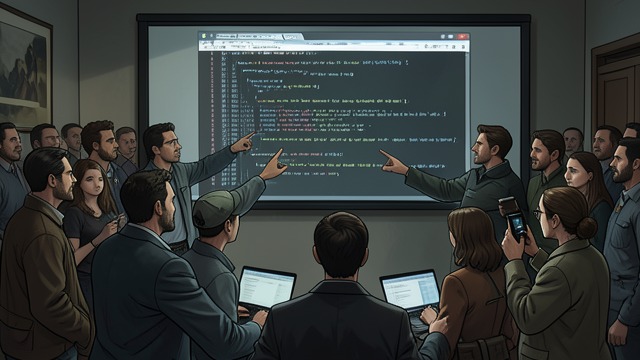
Thousands of programmers could examine Linux and submit corrections. The project thus had an unusually large pool of people available to find weaknesses and suggest repairs.
Eric Raymond summarized the attraction in the phrase that enough eyes could make bugs shallow. The claim emphasizes breadth of inspection, not the infallibility of any contributor.
Coordination Still Matters
A flood of proposed changes could also create confusion or inconsistency. Review and integration were necessary to preserve a coherent system while benefiting from dispersed effort.
The tension between exploration and coherence is the thread’s central conflict: more contributors broaden discovery, but shared standards and acceptance decisions keep the result usable.
A Hybrid Model Endures

Distributed Work, Shared Product
An Alternative to Microsoft
Linux became a major challenger to Microsoft despite lacking the conventional ownership and employment structure associated with a large software company.
Its contributors did not need to agree on every task or work under one supervisor. They needed ways to submit work and a process that could decide what belonged in the system.
The Balance of the Case
The example supports decentralization, but not as a universal remedy. The project’s achievement depended on joining broad participation to mechanisms that aggregated and vetted the contributions.
The story’s resolution is institutional rather than personal: open effort can succeed when a community has a credible path from local problem-solving to a coherent whole.
1991
The early development of Linux
As Linux matured
After Linux’s contribution process took shape
The book’s chapter 4 conclusion
